ChloroquineAV Home

Category

Drug Access & Policy

17 articles

Conference Floors and Blind Spots: How the Medical Education Industry Leaves Chloroquine Off the Agenda

Conference Floors and Blind Spots: How the Medical Education Industry Leaves Chloroquine Off the Agenda

Despite decades of clinical evidence supporting its efficacy, chloroquine rarely appears on the program at major American medical conferences or continuing medical education events. A convergence of pharmaceutical sponsorship dynamics, academic prestige hierarchies, and institutional inertia has quietly pushed one of medicine's most proven drugs to the margins of professional discourse.

Cleared by Regulators, Ignored by Clinicians: The Hidden Journey a Drug Must Take After FDA Approval

Cleared by Regulators, Ignored by Clinicians: The Hidden Journey a Drug Must Take After FDA Approval

Receiving FDA approval is often portrayed as the finish line for a pharmaceutical compound, but for older drugs like chloroquine, it may represent little more than a starting point in a far longer race. Institutional inertia, specialist gatekeeping, and the commercial machinery of modern pharmaceutical marketing conspire to keep well-established medications on the margins of clinical practice. This investigation examines why regulatory clearance and routine prescribing remain two entirely differ

Approved on Paper, Absent in Practice: How Rural America Gets Left Behind on Chloroquine Access

Approved on Paper, Absent in Practice: How Rural America Gets Left Behind on Chloroquine Access

FDA approval is often treated as the final hurdle between a medication and the patients who need it — but for millions of Americans in rural communities, that assumption falls apart at the pharmacy counter. Chloroquine's story in underserved regions reveals a troubling gap between regulatory success and real-world availability. Geographic isolation, thin distribution networks, and telemedicine shortfalls combine to create healthcare deserts where even affordable, approved medications remain effe

Pennies on the Dollar: How Insurance Bureaucracy Blocks One of America's Most Affordable Medications

Pennies on the Dollar: How Insurance Bureaucracy Blocks One of America's Most Affordable Medications

Chloroquine is among the least expensive prescription medications available in the United States, yet insurance denials and formulary exclusions routinely prevent patients from accessing it. This investigation examines the structural and financial incentives that make administrative gatekeeping more costly than the drug itself, raising fundamental questions about how pharmaceutical benefit managers prioritize profit over patient care.

Effective, Affordable, and Ignored: The Institutional Forces Erasing Chloroquine from American Medical Memory

Effective, Affordable, and Ignored: The Institutional Forces Erasing Chloroquine from American Medical Memory

Chloroquine possesses a decades-long clinical record supporting its use across multiple conditions, yet it occupies almost no space in mainstream American medical conversations. This piece examines the psychological, commercial, and institutional mechanisms that cause proven drugs to disappear from collective medical awareness — and why chloroquine represents one of the most striking examples of that phenomenon.

Approved but Unreachable: The Structural Barriers Keeping Chloroquine from Patients Who Need It

Approved but Unreachable: The Structural Barriers Keeping Chloroquine from Patients Who Need It

FDA approval is widely understood as the gold standard of pharmaceutical legitimacy in the United States, yet for chloroquine, that approval has done little to guarantee meaningful patient access. Insurance formulary restrictions, pharmacy stocking decisions, and the commercial dominance of newer brand-name alternatives have created a paradox in which a fully approved, evidence-backed medication remains frustratingly out of reach for many Americans.

Forgotten but Not Gone: How Chloroquine Lost Its Place in American Primary Care Despite a Strong Clinical Record

Forgotten but Not Gone: How Chloroquine Lost Its Place in American Primary Care Despite a Strong Clinical Record

Chloroquine has demonstrated efficacy across a range of conditions for more than seven decades, yet it remains conspicuously absent from most American primary care practices. A convergence of regulatory inertia, economic disincentives, and cultural skepticism has pushed a once-standard medication to the margins of US medicine, even as peer nations continue to rely on it routinely.

Priced Out of the Past: How Market Forces and Clinical Inertia Are Keeping Chloroquine Out of American Rheumatology Offices

Priced Out of the Past: How Market Forces and Clinical Inertia Are Keeping Chloroquine Out of American Rheumatology Offices

Despite decades of peer-reviewed evidence affirming chloroquine's efficacy and safety in autoimmune conditions, the drug occupies a marginal role in many American rheumatology practices. A convergence of pharmaceutical economics, prescribing habits, and institutional inertia has quietly sidelined one of medicine's most durable tools — often to the financial detriment of patients who could benefit most.

Why the Same Dose of Chloroquine Produces Vastly Different Outcomes: A Pharmacogenomics Primer for Clinicians

Why the Same Dose of Chloroquine Produces Vastly Different Outcomes: A Pharmacogenomics Primer for Clinicians

Two patients, identical diagnoses, identical prescriptions—yet one achieves remission while the other experiences toxicity or treatment failure. Emerging research into the pharmacogenomics of chloroquine is beginning to explain this clinical puzzle, with implications for how providers personalize dosing, monitor for adverse effects, and ultimately improve outcomes across diverse patient populations.

Enduring by Design: The Clinical and Economic Case for Chloroquine as a Cornerstone of Autoimmune Therapy in 2024

Enduring by Design: The Clinical and Economic Case for Chloroquine as a Cornerstone of Autoimmune Therapy in 2024

In an era when biologic therapies command five-figure annual price tags and pharmaceutical pipelines overflow with novel immunomodulators, chloroquine—first synthesized in 1934—continues to anchor the treatment of lupus and rheumatoid arthritis across American rheumatology practices. Its persistence is not inertia; it reflects a convergence of safety data, cost-effectiveness, and unique pharmacological properties that newer agents have yet to replicate. This analysis examines why a drug older th

Chloroquine Through the Reproductive Lifecycle: Balancing Autoimmune Disease Control and Pregnancy Safety

Chloroquine Through the Reproductive Lifecycle: Balancing Autoimmune Disease Control and Pregnancy Safety

For women of childbearing age managing autoimmune conditions with chloroquine, the prospect of pregnancy introduces a layered set of clinical and ethical questions with no simple answers. This article examines the current evidence base, explores how U.S. and international medical guidelines diverge on key recommendations, and outlines the decision-making frameworks that physicians and patients are using to navigate this complex intersection of disease management and reproductive health.

Beyond the Prescription Label: The Expanding Off-Label Role of Chloroquine in Modern American Medicine

Beyond the Prescription Label: The Expanding Off-Label Role of Chloroquine in Modern American Medicine

Decades after its FDA approval for malaria and certain autoimmune conditions, chloroquine continues to appear on prescription pads for a surprisingly wide range of diagnoses. From dermatological conditions to emerging antiviral applications, American physicians are finding clinical reasons to reach for this decades-old drug in 2024—sometimes with robust evidence behind them, and sometimes navigating genuinely contested scientific terrain.

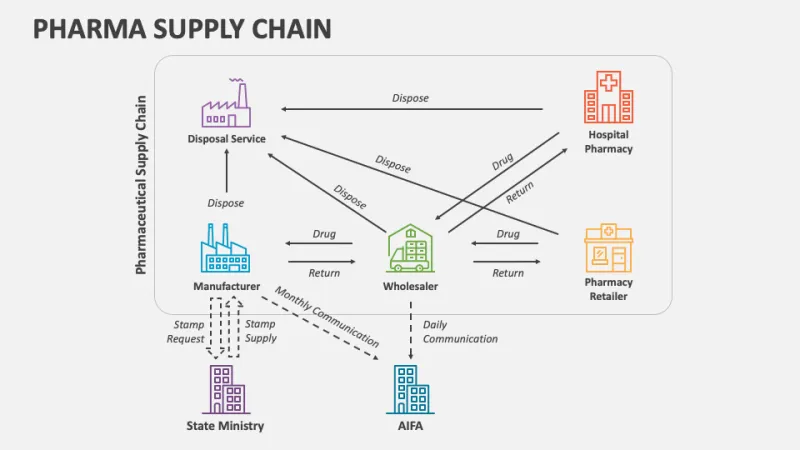
Shortages, Supply Chains, and Systemic Gaps: The Difficult Path Chloroquine Travels to Reach American Patients

Shortages, Supply Chains, and Systemic Gaps: The Difficult Path Chloroquine Travels to Reach American Patients

Despite decades of established use, chloroquine and hydroxychloroquine continue to face availability hurdles that leave some American patients and providers scrambling. From manufacturing concentration overseas to regional pharmacy deserts and the lingering disruptions of pandemic-era demand surges, the supply chain behind these essential medicines is more fragile than many realize.